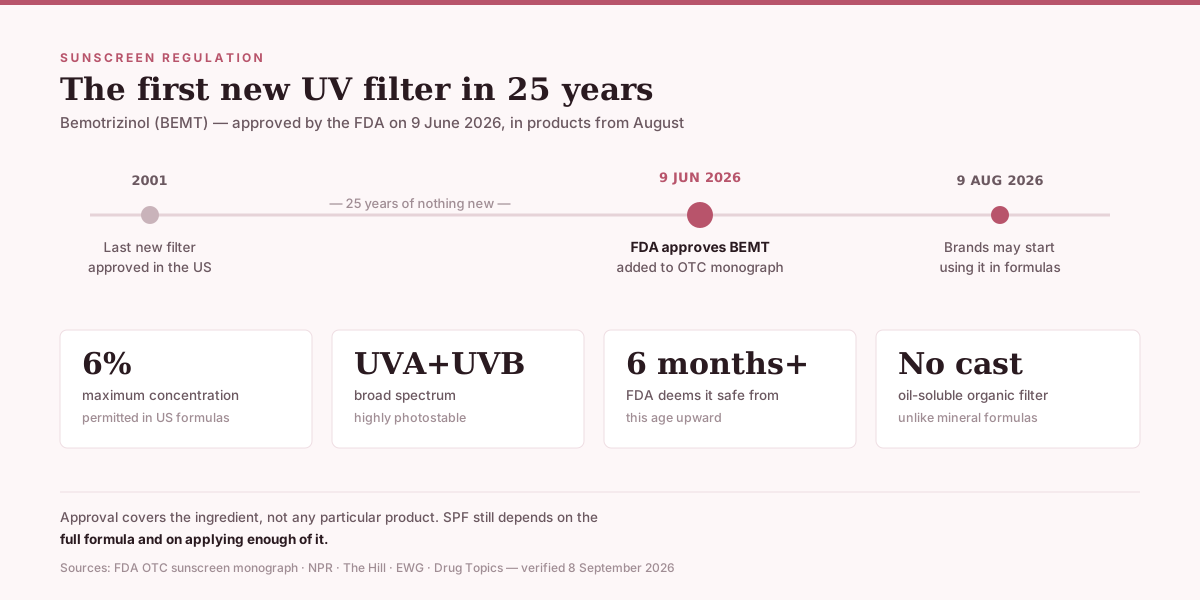
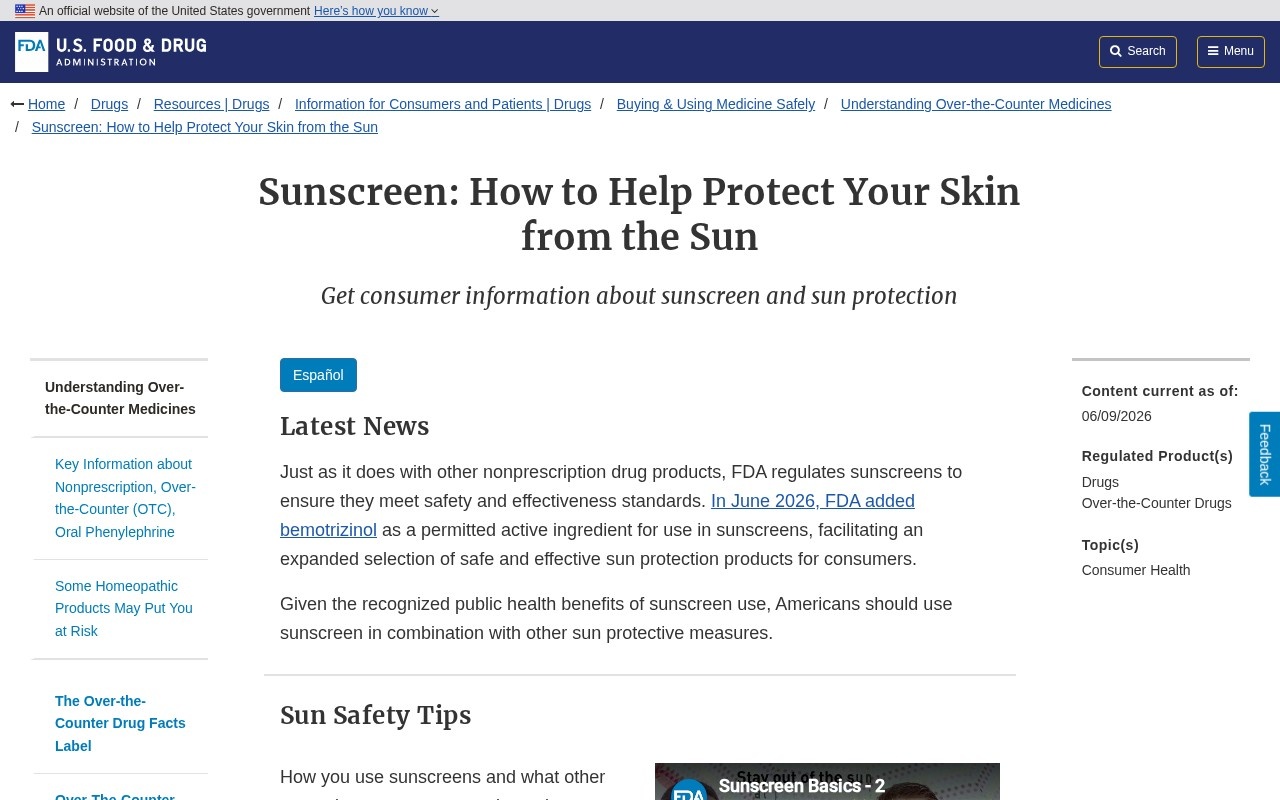
The US Food and Drug Administration approved bemotrizinol, known as BEMT, on 9 June 2026, adding it to the over-the-counter sunscreen monograph at concentrations up to 6% and making it the first new sunscreen active ingredient cleared for American shelves in 25 years. Manufacturers were permitted to begin using it in formulas from 9 August, and the first products containing it reached US shoppers at the end of August.
The filter is oil-soluble and organic, gives broad-spectrum protection across both UVA and UVB, is highly photostable, and shows low absorption through the skin. Unlike mineral formulas built on zinc oxide or titanium dioxide, it leaves no visible white cast. The FDA classified it as generally recognised as safe and effective for adults and for children aged six months and older.
Bemotrizinol has been in use in Europe, Asia and Australia for roughly two decades. The gap was regulatory, not scientific: US sunscreens are governed as over-the-counter drugs rather than cosmetics, and the approval pathway for new actives had been effectively stalled since 2001.
What this changes for someone buying sunscreen
- Texture, mainly. The complaints that drive people to skip sunscreen — white cast, heaviness, pilling under makeup — come largely from the filters available in the US. BEMT allows lighter formulas without giving up broad-spectrum coverage.
- Not an SPF upgrade by itself. Approval covers the ingredient. Protection still depends on the whole formula, the SPF it tests to, and whether enough is applied and reapplied.
- Availability will be slow. Reformulating and retesting a sunscreen takes time. Most products on shelves this autumn still use the older filter set.
How to tell whether a bottle contains it
Check the active ingredients panel, not the marketing copy on the front. The name will appear as bemotrizinol, or under its trade name Tinosorb S, or as bis-ethylhexyloxyphenol methoxyphenyl triazine. If none of those appear in the actives list, the product does not contain it, regardless of what the label promises.
What has not changed
Sun protection habits matter more than the filter list. The FDA's approval says nothing about how much sunscreen people actually apply, which remains the largest gap between the SPF on a bottle and the protection someone gets from it. It also does not affect the safety status of existing filters, which remain approved.
Common questions
Is bemotrizinol safe?
The FDA classified it as generally recognised as safe and effective for adults and children from six months of age, at concentrations up to 6%. It has been used in other markets for around twenty years. This article reports the regulatory decision; it is not medical advice, and anyone with a skin condition or a history of reactions to sunscreen should ask a dermatologist rather than a website.
Is it better than mineral sunscreen?
Different, not strictly better. It avoids the white cast that makes mineral formulas unpopular on deeper skin tones, and it is more photostable than some older organic filters. Mineral filters remain approved and effective. The best sunscreen is still the one someone will actually wear every day.
When will products with it be widely available?
Brands could begin using it from 9 August 2026 and the first products appeared within weeks. Broader availability depends on individual reformulation timelines, which typically run months rather than weeks.
Sources
- FDA over-the-counter sunscreen monograph, decision dated 9 June 2026
- NPR, 11 June 2026 — coverage of the approval
- The Hill and Environmental Working Group — industry and advocacy reaction
- Drug Topics — reporting on the first US products containing the filter
This report will be updated as more products reach the US market. Last verified 8 September 2026.
Community discussion
Enjoyed this story? Share your thoughts below.